
Doctor-Patient Telemedicine Station

The EDIT telemedicine system is based on two points that collaborate with each other remotely: the Doctor-Patient Station and the Doctor-Consultant Station.

The Doctor-Patient Station — Where the patient is

The Doctor Patient Station is the point of care where the patient presents for a telemedicine consultation. It is installed within local healthcare facilities, such as Primary Healthcare Centres, Community Medical Clinics, or other healthcare units, ensuring access to specialized medical services, particularly in remote, insular, and underserved regions where the availability of specialist physicians is limited.

Throughout the telemedicine session, the patient is supported by an on site healthcare professional, typically a physician, who is physically present at the Doctor Patient Station and is responsible for the clinical management of the examination. The physician performs the initial clinical assessment, obtains the patient’s medical history, conducts the necessary physical examination, records the patient’s vital signs, and acquires the required diagnostic measurements, including blood pressure, heart rate, body temperature, electrocardiography (ECG), and other biomedical parameters, using the station’s certified medical devices.

The on site physician acts as the clinical extension of the remote consultation by performing the required medical procedures and operating the diagnostic equipment in accordance with the instructions of the remotely consulting specialist. This collaborative model ensures the accurate acquisition and secure transmission of clinical data, thereby supporting a comprehensive, reliable, and safe telemedicine consultation.
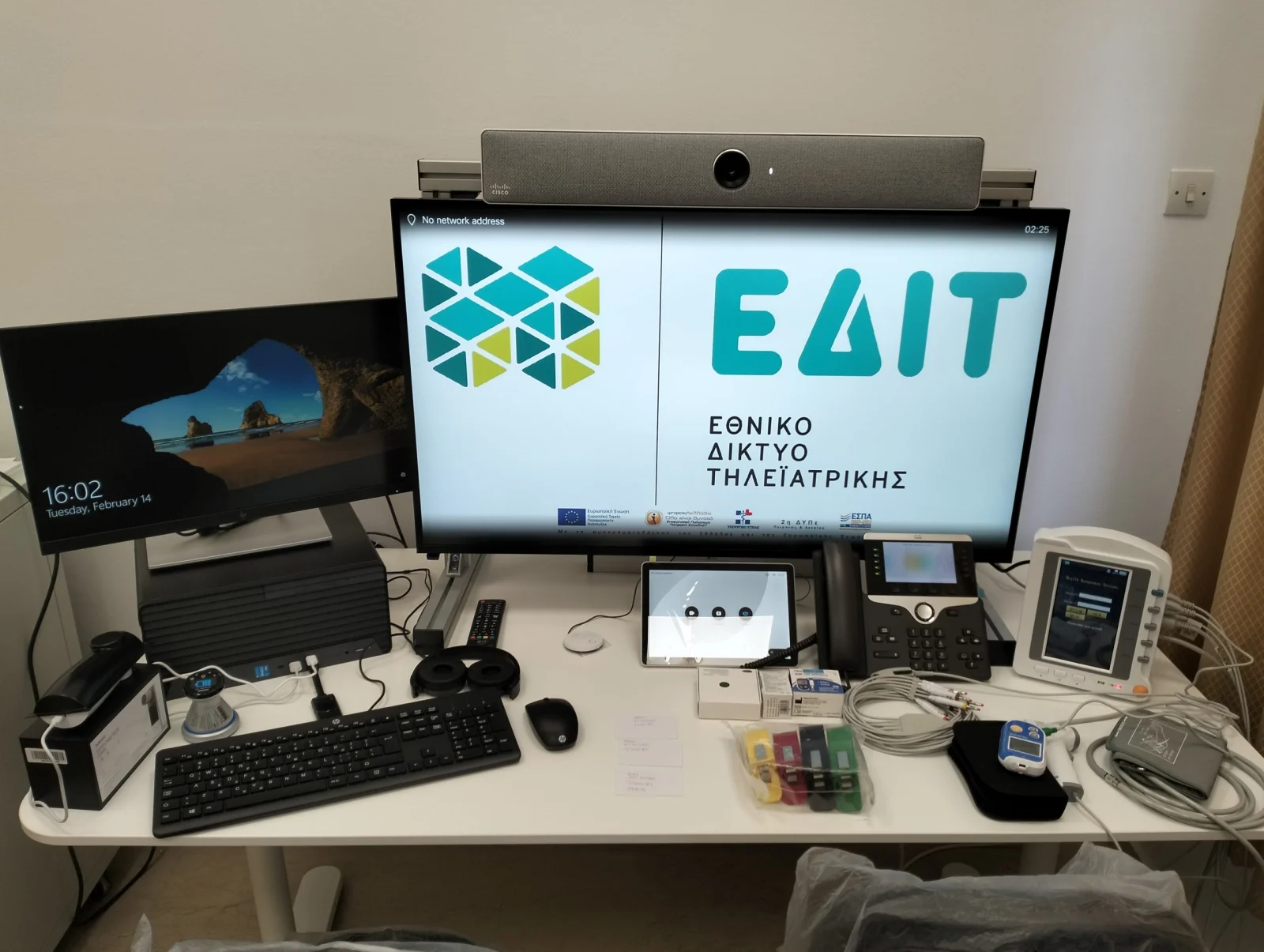
Connected Medical Equipment

  • 01

    High-Resolution Examination Camera

  • 02

    Spirometer

  • 03

    High-resolution examination camera – Otoscope & Dermatoscope

  • 04

    Stethoscope

  • 05

    Pulse measurement, oximeter, thermometer, blood pressure monitor, cardiograph​

  • 06

    Ultrasound (interconnection of existing devices)

Consultant – Physician Telemedicine Station

The Doctor-Consultant Station — Where the specialist doctor is located

The Consulting Physician Station is the specialized telemedicine endpoint from which expert clinical consultation services are provided. It is typically located within secondary or tertiary care hospitals, university medical centers, or other specialized healthcare institutions. The station is staffed by a physician of the appropriate medical specialty who delivers remote expert clinical assessment and specialist consultation for patients being evaluated at geographically distant healthcare facilities.

The consulting physician is not in direct physical contact with the patient and does not personally perform the physical examination. Through the secure telemedicine platform, however, the physician has real time access to the audiovisual consultation, the patient’s demographic and clinical information, vital signs, diagnostic measurements, medical images, and any additional clinical data transmitted from the Doctor Patient Station.

Based on the available clinical information and in close collaboration with the attending physician at the Doctor Patient Station, the consulting physician performs a comprehensive clinical assessment, formulates an evidence based specialist opinion, provides diagnostic and therapeutic recommendations, and, where clinically indicated, advises on further diagnostic investigations, referral to an appropriate specialist service, or transfer to a higher level healthcare facility. This collaborative model ensures continuous access to highly specialized medical expertise regardless of the patient’s geographical location, thereby enhancing the quality, safety, continuity, and equity of healthcare delivery.

How is the connection between the Doctor-Patient and the Consultant Doctor is done?

How are the two stations connected?

The two stations are connected via a secure real-time telemedicine connection (image, audio and medical data). The essential point is this: the communication is between the two doctors, not between the patient and a doctor on a screen.

That is,

  • The attending physician of the Doctor-Patient Station examines the patient and the results of the examination (video, audio and measurements) are accessible by the medical consultant in real time.
  • The medical consultant evaluates the data, asks questions, guides the examination and gives his specialized assessment.
  • The attending physician gives an opinion based on the advice of the specialized physician

Which doctor has the ultimate responsibility?

Based on the current legal framework (Law 3984/2011, article 66 par. 16), the final decisions, opinions and instructions remain the responsibility of the treating physician who is with the patient at the Doctor-Patient Station (STIA). He is the one who applies the treatment, informs the patient and undertakes the follow-up.

Telemedicine technology does not replace human contact — it brings it closer. Through innovation, we empower prevention, early diagnosis and care, wherever the patient is.